
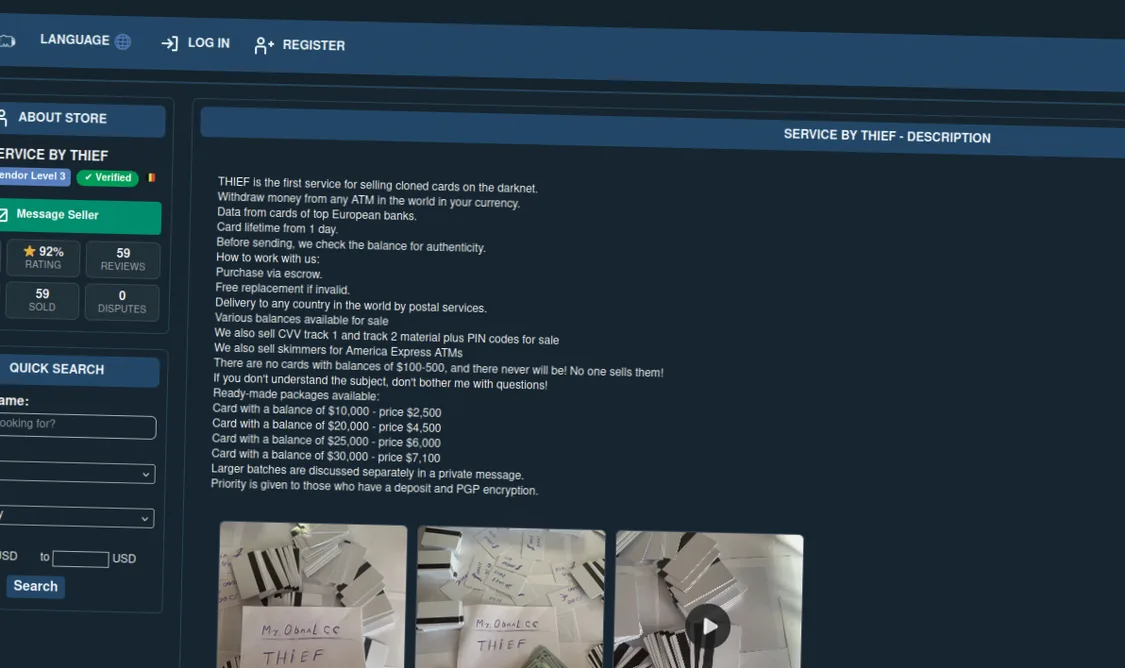
Mark T., a 34-year-old from Florida, believed he had found a foolproof scheme in November 2024. He acquired six cloned debit cards from a darknet marketplace, each preloaded with stolen magnetic data and PINs, for $480 in cryptocurrency. The first three withdrawals netted him $4,200 in cash. The fourth ATM, however, became his undoing.
This is not a guide to carding. It is a cautionary tale about why ATM surveillance systems are more effective than most criminals anticipate—and how a chain of digital evidence can unravel even the most carefully planned operation. The story also underscores the role of tools like a credit card skimming device detector in preventing such crimes, though Mark’s downfall came from a far simpler oversight.
The Carding Chain: How Stolen Data Becomes Cash
Carding, the trade and exploitation of stolen banking information, remains one of the oldest and most persistent cybercrimes. The process Mark followed was textbook:
Data Harvesting: Criminals obtain magnetic track data (track 1 and track 2) via ATM skimmers, shimmer devices, phishing attacks, or by purchasing "dumps" on darknet forums, including carding forums dark web platforms.
Card Creation: The stolen data is encoded onto blank plastic cards, which are then embossed with realistic details—cardholder names, expiration dates, and card numbers—to mimic legitimate cards.
PIN Acquisition: If the PIN was compromised (through keypad overlays or hidden cameras on ATMs), the buyer receives a fully functional card for cash withdrawals.
Cash-Out Phase: The buyer withdraws money from ATMs before the victim detects the fraud and blocks the card. This is where a credit card skimmer protector or credit card skimming protection might have helped the victims, but Mark’s targets had no such safeguards.
Money Laundering: The cash is converted into cryptocurrency via Bitcoin ATMs or peer-to-peer exchanges, obscuring the trail.
Mark’s purchase was made on an unnamed marketplace, with payment in Monero—a cryptocurrency chosen for its perceived untraceability. The cards arrived in unmarked packaging, seemingly a flawless transaction. Yet one critical detail escaped his notice: ATMs are not just cash dispensers—they are evidence-gathering machines. This oversight is why knowledge of how to tell if a card reader has a skimmer or how to check for credit card skimmers can be a lifesaver for financial institutions and consumers alike.
The Camera: The Weak Link Mark Overlooked
Why do ATM cameras remain the most decisive tool against carding? Because they transform digital crime into a physical, traceable act.
A modern ATM is a surveillance powerhouse. It includes:
A front-facing camera recording the user’s face in 1080p, often with infrared for night vision.
A secondary hidden camera, positioned at an angle invisible to the user.
A transaction log that records every detail: time, amount, card number, ATM ID, and transaction status.
Geolocation data, linking the ATM’s coordinates to the bank’s logs.
A network log capturing requests to the bank’s processor, including metadata.
When Mark approached his fourth ATM in a Tampa Bay suburb, the built-in camera captured his face in full profile—no mask, no disguise. He withdrew $700 and left. Twenty-three seconds of footage were all it took to identify him.
The reason is simple: darknet anonymity ends where the physical world begins. ATMs, unlike darknet nodes, are fixed points where digital and physical evidence converge. Understanding atm skimmer images or how to tell if there is a card skimmer can help users avoid falling victim, but for criminals, the camera is the inescapable weakness.
The Investigation: A 15-Day Trail from ATM to Arrest
How does an investigation into cloned cards unfold? The timeline reveals a relentless chain of evidence.
Day 1 – November 2024: Three victims in Florida, Georgia, and North Carolina notice unauthorised withdrawals. They report the fraud to their banks, which block the cards and forward the data to an early fraud detection system. This is where tools like a credit card skimming device detector could have intercepted the activity earlier, but the banks relied on their existing systems.
Day 3: The bank’s anti-fraud algorithms detect a pattern—multiple withdrawals from cloned cards across different states in a short window. An automatic flag is raised, and the case is escalated to the bank’s investigation team. Had the victims or banks employed credit card skimming protection measures, the fraud might have been detected sooner.
Day 5: The bank hands the case to the U.S. Secret Service (USSS), which oversees financial crimes. A USSS analyst requests ATM logs and video recordings from the affected machines.
Day 8: Video from the fourth ATM provides a clear image of Mark’s face. A database search through the Florida Department of Public Safety (DPS) driver’s licence records confirms his identity. Simultaneously, transaction analysis shows all withdrawals occurred within 40 miles of his home address—a detail that further incriminated him.
Day 12: Investigators obtain a warrant for electronic traces, including browser history, ISP records, and crypto wallet activity. ISP analysis reveals visits to Tor exit nodes during the hours corresponding to his darknet purchase. The Monero wallet is linked to his account on the marketplace via a court order to the exchange where he bought the cryptocurrency.
Day 14: A search warrant is issued for Mark’s home. Authorities seize six blank plastic cards, a magnetic stripe read/write device (MSR), a laptop with traces of Tor Browser and darknet marketplace visits, $3,200 in cash, and the packaging from the card shipment.
Day 15: Mark is arrested. During interrogation, he admits to purchasing the cards and using four of the six. The remaining two had already been blocked by the banks when he attempted to use them.
The pace of the investigation highlights how quickly digital and physical evidence can converge to expose even the most cautious offenders. For those exploring card skimming reddit threads or cf card cloning discussions, Mark’s story serves as a stark reminder of the risks.
The Numbers Behind the Case
Mark’s case is a study in how small details can unravel a larger scheme. The numbers tell the story:
| Metric | Value |
|---|---|
| Withdrawals | 4 |
| Total amount withdrawn | $4,900 |
| Cost of cloned cards | $480 |
| Days from withdrawal to arrest | 15 |
| Federal prison sentence | 60 months |
| Fine and restitution | $22,000 |
| Supervised release | 3 years |
These figures underscore the efficiency of modern law enforcement and the risks of engaging in carding. For those tempted by discussions on cloned cards reddit or carding forums dark web, Mark’s sentence is a clear warning.
Why Monero Wasn’t Enough to Hide Mark
Mark paid for the cloned cards using Monero, a cryptocurrency designed for anonymity. Yet the investigation still traced him. Why?
The answer lies in the weak links of the crypto chain:
The Purchase Point: Mark bought Monero through a centralized exchange that required KYC verification—uploading his passport and a selfie. Under a court order, the exchange provided his identity and transaction history. Even if Monero itself is hard to track, the entry point into crypto is not.
The Time Window: The purchase of Monero, the darknet marketplace transaction, the receipt of the cards, and the ATM withdrawals all occurred within two weeks. The alignment of these timeframes provided circumstantial but compelling evidence.
Physical Evidence: The cloned cards found during the search contained magnetic tracks matching the stolen data from the victims. This physical proof could not be erased by crypto transactions.
The Camera: A clear image of Mark’s face on ATM footage is irrefutable evidence. No cryptocurrency can obscure a face captured on video.
For those exploring credit card skimming protection or card skimming protector tools, Mark’s case demonstrates that even sophisticated digital anonymity measures cannot withstand the combination of physical and digital forensics.
Mark’s Mistakes: A Playbook of What Not to Do
What went wrong for Mark? His errors were both strategic and tactical. Understanding them can help others avoid the same fate—and highlight the importance of credit card skimmer protection for potential victims.
Geographic Clustering: All four ATMs were within 40 miles of his home. Anti-fraud systems flag such patterns immediately, as they are unlikely to occur organically.
No Disguise: Mark made no effort to conceal his identity. His face, captured on camera, was a direct link to his driver’s licence in the DPS database. For comparison, knowing how to tell if there is a card skimmer can help users protect themselves, but for criminals, avoiding cameras is non-negotiable.
Centralized Exchange for Monero: He used a KYC-compliant exchange to buy Monero, which linked his real identity to the crypto purchase. This was a critical misstep.
Evidence at Home: The search revealed cloned cards, an MSR device, a laptop with darknet marketplace history, and cash matching the ATM denominations. Digital traces, such as Tor Browser history, often survive deletion attempts.
Cash on Hand: The $3,200 found in his home matched the denominations dispensed by the ATMs, further strengthening the case against him.
Speed of Execution: All withdrawals occurred within two weeks. While spreading them out might have delayed detection, the cameras would have eventually exposed him regardless.
These mistakes illustrate the vulnerabilities in even seemingly well-planned schemes. For those interested in atm skimmer images or credit card skimming protection, Mark’s case is a textbook example of how easily such plans can unravel.
Lessons for Security Professionals
Mark’s case is less a testament to his ingenuity and more a demonstration of how robust security systems can be. For cybersecurity professionals, the takeaways are clear:
Anti-Fraud Systems as the First Line of Defence: Banks’ anti-fraud algorithms—pattern analysis, geolocation rules, and scoring models—worked automatically to flag the fraud before human intervention. Investing in machine learning models for anomaly detection remains critical.
Integration of Physical and Digital Forensics: The key evidence in Mark’s case was the ATM video footage. However, without the digital transaction logs, the video would have been less useful. The ability to correlate physical and digital evidence is foundational to successful investigations. Tools like a credit card skimming device detector can enhance this process.
The Limits of Anonymous Cryptocurrencies: While Monero offers strong privacy features, the entry and exit points of the crypto chain—such as KYC exchanges and cash withdrawals—create vulnerabilities. As long as KYC exists, full anonymity is unachievable.
Customer Education is the Weakest Link: The victims did not notice the fraud immediately. Faster reporting leads to quicker card blocking, reducing the window for cash-outs. Banks should continue to educate customers on identifying and reporting suspicious activity promptly, including how to check for credit card skimmers.
The case also highlights the importance of tools like card skimming protection and card skimming protector measures in preventing such crimes from occurring in the first place.
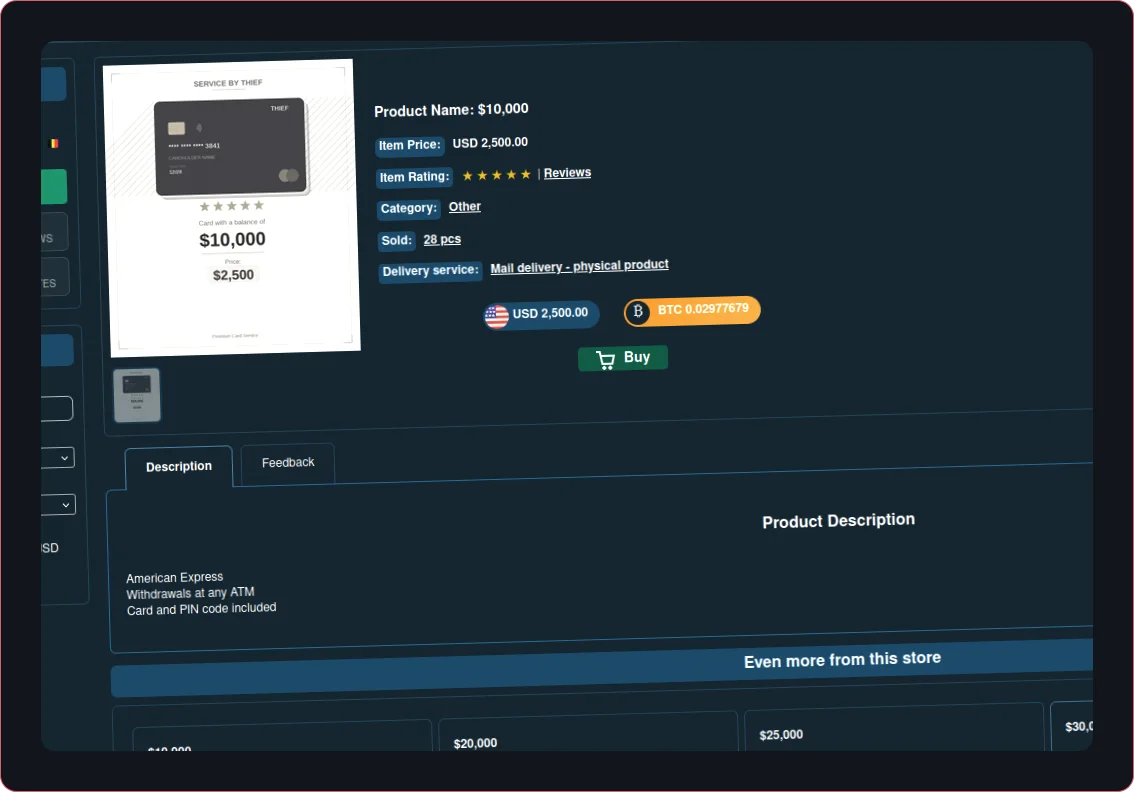
An example of a darknet marketplace offering services similar to those Mark used.
The Verdict: A Final Link in the Chain
In March 2025, Mark T. pleaded guilty to charges of fraud and related activity in connection with access devices (18 U.S.C. § 1029) and money laundering (18 U.S.C. § 1957). The U.S. District Court for the Middle District of Florida sentenced him to 60 months in federal prison, followed by three years of supervised release, a $22,000 fine, and restitution to the three victims.
The judge noted that Mark was not the organiser of the scheme—he was the buyer, the final link in the chain. This final link, however, bears the physical risk and receives the physical punishment. The organisers higher up the chain often remain in the shadows, a separate challenge for law enforcement to address.
For those tempted by discussions on card skimming reddit or carding forums dark web, Mark’s case serves as a stark reminder: the risks far outweigh the potential rewards. The same applies to anyone considering the purchase of cloned cards or engaging in carding activities. The digital and physical trails are too robust to escape.
The Inevitable Collision of Digital and Physical Evidence
Mark’s story is a cautionary tale about the inevitable collision of digital crime and physical evidence. ATM cameras, transaction logs, and digital forensics form a net that even the most anonymous cryptocurrencies cannot evade. For criminals, the lesson is clear: the final link in the chain is always the most vulnerable. For security professionals, the case underscores the importance of integrating physical and digital measures, from credit card skimmer protection to advanced anti-fraud systems. And for the public, it highlights the need for vigilance, including knowledge of how to tell if a card reader has a skimmer.
Mark’s downfall began with a single transaction on the website where the purchase was made.